

Bypassing nostalgia: was Stephen Harper’s record good, or bad?
Right now the media is having a nostalgia party about Harper, and suddenly all of his actual policies are forgotten. Well, let’s take a serious, non partisan, critical view of his legacy

Good morning. I managed to find the time today to write a piece after all. Thank you everyone for your patience as I try to balance my responsibilities in University, Substack, and Freelancing. You are all genuinely the best, and your support has transformed my life for the better.
Mostly Liberal
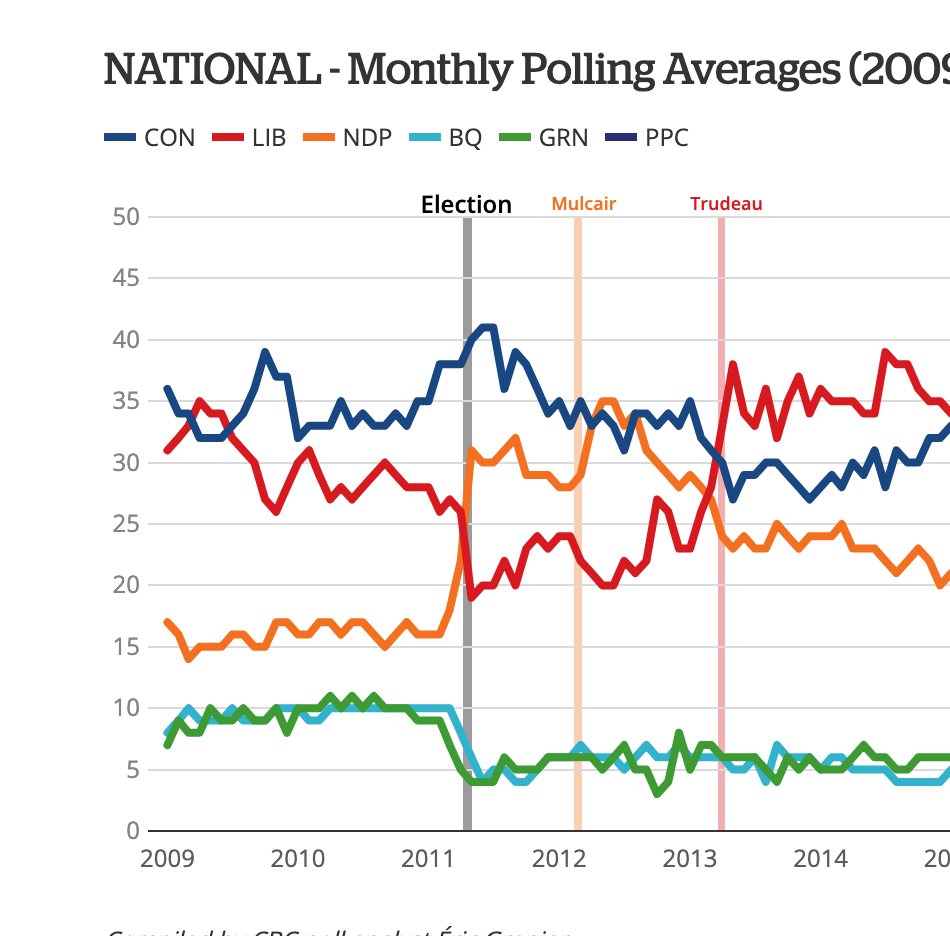
Recently there has been a wave of nostalgia sweeping the media, something that happens ten years after every leader is crushed in the polls. In 2011, Harper was watching a strong left flank develop beside him under the late Jack Layton’s leadership, but it was not to be so. Justin Trudeau, a federal Liberal, was able to move to the left of Mulcair. In 2015, Trudeau won.
The Liberals have ruled over Canada for a vast majority of its existence. The centrist ideology that was established by John A. Macdonald upon confederation was cemented in our political culture, and Wilfrid Laurier created the template for most future Liberal leaders.
Every time you speak, make it sound like you’re a left winger and a right winger at the same time.
With the exception of the long tenure of John A. Macdonald, the conservatives have ruled for small portions of Canada’s history. The cycle of Canada has tended to be, and seems to continue being, long tenures of Liberal governments, followed by a short period of a Conservative government. It has been 129 years since Wilfrid Laurier took office. Since then, Canada has been ruled by the Liberals for 89 years, and by the conservatives for 40. The Liberals are the most successful party in western democratic history. Liberals often lead for a decade and a half.
Conservatives are lucky if they get a second term.
But any historian worth their salt knows that some of the best leadership Canada has had were conservative leaders.
The Conservatives who came before Harper
Robert Borden, a conservative, gave us women’s suffrage (except in Quebec), he gave us income tax, he restructured the Parliament to prioritize the house of commons (elected) over the senate (unelected). He established statistics Canada, and a national research council. He also interned Ukrainians, was a racist, and enforced conscription (except in Quebec), but this is, sadly, common for leaders of western, majority white nations of the time. Despite being a good leader, and leading the country through World War I, he was a white imperialist, and for that he might never be remembered in the echelon of the best leaders. But, contextually, he should be well regarded for some of his policy achievements.
R.B Bennett led Canada for one term, and although he ended his term with a slew of excellent policies, the first four years of his rule were marked by a terrible management of the great depression. Still, Bennet created the CRTC, and created the welfare state by introducing minimum wage, progressive income tax, unemployment insurance, a framework for health insurance, and laid the groundwork for Mackenzie King and others to do much more. Sadly for him, the creation of these programs was at the tail end of his time in power, and he’d done such a terrible job leading Canada through the great depression for the first four years of his leadership that he promptly lost— too little too late, Canadians said— and all of the work he did to create a welfare state was promptly continued by Mackenzie King, and Bennett is forgotten to all but the most pedantic of historians.
Meanwhile Diefenbaker, a conservative, is truly one of our greatest leaders. He introduced the Canadian Bill of rights, enshrining human rights into Canadian law. He gave First Nations people the right to vote without having to give up their rights as a status Indian, or lose their treaty rights. His government eliminated racial discrimination in immigration policy, attempting to remove bias against non-white immigrants. He fought against South African apartheid, His government increased old age pensions, enhanced benefits for veterans, provided aid for disabled individuals, and implemented a winter works program to address seasonal unemployment– an expansion of the developing welfare state. He also appointed the first woman and first indigenous person to the senate. His weak point? The economy was pretty bad at the time. That’s why he lost to Lester B. Pearson– who would become one of, if not our greatest federal Prime Minister.
Mulroney, who became the next federal conservative leader 19 after the defeat of Diefenbaker, worked hard to dismantle the welfare state and shift the power of political control and financial control to privatized nations. He quit office before the end of his second mandate, having been complicit in a bribery scandal where he took $225,000 in cash during the “Airbus affair.”
Kim Campbell and Arthur Meighen were also prime ministers.

Ending another Liberal period
The Liberals took power back from Mulroney in 1993, and ruled until 2006— finally being defeated by Stephen Harper. It has been twenty years since the inauguration of Harper, and so his painted portrait was hung in Parliament. A gala took place this week to celebrate his leadership, and a wave of nostalgia has run through the media and the nation.
In 2026, it’s easy to look back at Harper and compare him to someone like Poilievre, or Trump. Poilievre, who is often criticized for looking insecure and immature– name calling, nicknames, one liners, catch phrases and slogans– and Trump, who… well, go read our piece “American Fascism” for some historical journalism about Trump’s leadership. Yeah, Harper looks great compared to some leaders, but it’s easy to look great compared to Donald Trump.
Online there’s been a big resurgence of people thinking George W. Bush is great as well, which is shocking. Bush was one of the worst leaders in American history. He conducted the two most expensive wars in history while lowering taxes, and his government single handedly caused a global financial crisis second only to the great depressions– which caused World War II. That’s exceptionally bad.
So, we have to ask the question: In a Canadian context, was Harper a good leader? Only one thing can inform us of this– his record.
Here is Harper’s record, the bad, and the bad. And some good. But there’s a lot more bad than good. Hell, if you want to read an article on the Tyee from ten years ago, check this one out. They basically say what I say, but it’s way more fresh in their minds.
The good
Harper had a good team for the 2008 financial crisis. If there is definitely one good thing we can say about Harper, it’s that Canada walked through the great recession nearly unscathed. Still, even that has a lot of bad mixed in with the good. It’s also a rewriting of history to say that he helped Canada by choice. He was so prepared to dismantle the state and public jobs during that time that it triggered a parliamentary crisis and threatened to topple the Conservative government. It nearly created a Liberal-NDP coalition government, and Harper prorogued parliament for partisan political reasons.
Afterwards, Harper instituted the EAP, a stimulus package which temporarily suspended Harper’s ultra conservative austerity to create a pseudo-keynesian stimulus which saved Canada from a disastrous outcome. The response was internationally praised, and ironically, was more centrist than Harper preferred.
The other good is the regulatory strength of our boring, oligopoly of banking institutions that were heavily regulated. Harper saved the banks by supporting them with the central bank. It worked well for Canada in a time of global crisis, since the banks didn’t collapse under global financial strain.
You’ll notice that whenever they wheel out Harper to talk about anything, the only thing that anyone is willing to point to is their success during the Great Recession. When Harper endorsed Poilievre during the 2025 federal election? Harper managed the financial crisis, that’s why he mattered. At his portrait speech this week? Harper managed the financial crisis. At the portrait unveiling, a member of Harper’s cabinet was asked about his memory of Harper’s leadership. His response?
“I just think of competent stewardship of the economy, (during the) global economic crisis, leaving a balanced budget,” he said.
The great legacy of Harper was his success during the Great Recession. And let’s be clear– That’s an incredible success.
But there’s irony in this. His greatest success was when he fundamentally betrayed his own values. He made an enormous deficit in response. He had an expansionary state, inspiring leaders like Obama on how to save their economy. But it’s funny, he didn’t want to implement the Economic Action Plan in 2008. He wanted to cut public spending. The only reason he implemented it was because of pressure from the opposition, because he had a minority government.
The greatest success of Stephen Harper’s Conservative government was when he acted like a Liberal.
And we should applaud him for it. A good leader does what is necessary to help their country. In that moment, public expansion and huge spending saved potentially millions of people from losing their jobs (it also functioned as a massive corporate welfare state, but welcome to our system.)
Because he was so good at taking care of Canadian jobs during that time, he won a majority in 2011. The moment he won a majority, he cut government spending and implemented a regime of democratic backsliding, anti-scientific policy, austerity, and caused Canada’s international reputation to tank.
Democratic backsliding
Contempt of Parliament
Harper became the first leader in the history of the commonwealth to be found in contempt of Parliament. He refused to release un-redacted documents to Parliament that transparently showed how much the tax cuts cost him. He was found to be in contempt of Parliament, which has final say on any spending. The Parliament had a vote of no confidence. The proceeding election led to Harper’s only majority government– he was still riding on a high from his management of the crisis, and an extremely pedantic debate around redacted documents and parliamentary spending was shown to be a bit too abstract for the Canadian public. They saw a good manager, and they hired him for the next four years. By 2013, Harper would be collapsing in the polls, and a new, fresh faced young man named Justin Trudeau would take over the Liberal party.
Senate expenses scandal
He was also, like many other Canadian leaders, involved in a scandal with backdoor payments. Three conservative senators, Mike Duffy, Pamela Wallin, and Patrick Brazeau, claimed ineligible expenses from Parliament. It was found out, and they owed the government money. Harper’s chief of staff, Nigel Wright, wrote a $90,000 dollar cheque to Mike Duffy to cover his repayments.
During an independent investigation, it turns out that it was Harper himself that gave the go ahead. Court evidence exposed that Nigel Wright wrote an email that said “We are good to go from the PM,” which implied approval from Harper to proceed with the backdoor payments. There was no evidence that Harper himself helped in the payments. Nonetheless, it shattered confidence in Harper’s government, which had presented itself as the moral, Christian aligned government.
Voter Suppression
In 2011, when Harper won his majority, there is a good chance he won some ridings undemocratically through voter suppression. In non-conservative ridings, an automated “robocall” would call people and direct them to locations of fake polling stations. An investigation afterwards found out that there were fake registered staffers who had registered the burner phone numbers from where the call came.
Then, as a “response” to these scandals, the government claimed it would reduce fraud. The way they did it was through the, now infamous, Fair Elections Act, headed by Pierre Poilievre. The Fair Elections Act removed the vouching system– a system that enables people without identifications to vote. Essentially, if someone goes with someone and vouches for them, the individual without an ID can vote. This is a celebrated system that has resulted in no documented cases of fraud, and enables disabled people, poor people, homeless people, and others to vote. It also restricted Elections Canada’s power to investigate problems. Furthermore, it removed voter information cards, which are mailed directly to every registered voter, from being proof of eligibility. The timing of the law seemed particular as well, as it was passed in 2014, one year before an election.
Science bad
This might have been the most infamous thing that Harper did– beyond austerity, beyond democratic backsliding.
Stephen Harper muzzled scientists for his entire mandate. He implemented “communications protocols” that banned federally funded scientists from speaking publicly about their research unless it was pre-approved by government staff.
It became quite clear that it was an anti-climate change agenda. Specifically, many of these federal scientists were working on research that studied climate change, that studied the effects of fisheries, and the effect of climate change on polar regions. People spoke up. It was clear to many that Harper was running an Orwellian control of information, and that he was preventing tax payer funded research from reaching the public.
In July 2012, a march took place. Thousands of scientists, activists, and supporters marched on Parliament Hill. They carried a coffin with them, a statement to say that research institutions were dead. Harper closed the department of Fisheries and Oceans libraries. Harper said it was for cost saving. Instead, Harper destroyed large swathes of information, shredding papers, or throwing it into dumpsters.
Then Harper withdrew from the Kyoto Protocol, a 1992 UN agreement on climate change. Canada was a signatory under the Mulroney government, and Harper was the first signatory to withdraw from the agreement. The government had good arguments– the protocol didn’t include the United States or China, thus rendering it completely obsolete. Nonetheless, the backlash from the global community was severe– Canada was now considered a joke around environmentalism. Ironic, considering the international reputation we had from the time of Mulroney onwards.
International reputational decline
Harper didn’t like being a middle power. He wanted to be a major power. He was very inspired by the states, and has recently called himself the “most pro-American prime minister in Canadian history.” This is fairly indisputable.
Thinking of Canada as an emerging power (we weren’t, and still are not,) he decided that Canada’s support for Israel was significant. It wasn’t.
Harper became a staunch supporter of Israel, more than almost anyone except for the United States. He said he would support Israel “through fire and water”, framing this as a moral imperative, claiming Canada as a zionist nation. Canada opposed any resolution critical of Israel, and Canada became unable to fulfill its traditional role as a global peacekeeper and mediator.
So badly did Harper damage Canada’s international reputation in his quest to align himself with the United States, that for the first time in United Nations history, Canada failed to gain a seat on the UN rotating security council. It seemed to be a repudiation of Harper’s policies on climate change and Israel.
Harper claimed it was a moral victory.
He said that his government was “principled” and the UN was dominated by dictators and anti-democratic regimes. That stance may have carried more weight if Germany and Portugal weren’t the ones who replaced Canada on the security council– two democratic, progressive countries.
Social justice?
Harper also implemented mandatory minimum sentences for various drug and gun crimes. These mostly didn’t pass because they were found to be unconstitutional. Harper decried the legal system as overreaching. Conservative governments across Canada are still doing this.
Harper started off strong with Indigenous relations. In 2008, Harper became the first leader of Canada to apologize for the residential school system. It was widely praised, and stands as one of Harper’s finest moments.
Four years later, Harper implemented Bill C-45, which removed many rights of the Indian Act that protects Indigenous rights to adequate consultation. This triggered the now famous Idle No More movement, which was a massive movement across Canada that asserted Indigenous sovereignty and environmental stewardship. Harper’s obsession with resource extraction was to hurt his relationship with Indigenous peoples.
Harper then sidelined veterans in Canada. He closed nine Veteran Affairs offices under the banner of “cost cutting”, limiting access of veterans to valuable services that were needed at the time. He also replaced veteran payments of lifetime pensions with lump sum payments, once again as a “cost cutting measure.”
Nostalgia lies
The Stephen Harper nostalgia makes a lot of sense. I grew up with Jean Chretien, and Stephen Harper as the prime ministers of my childhood (I barely remember Paul Martin). When I hear Harper’s voice, it makes me remember a simpler time– living at my mom’s house, Corner Gas episodes, Barack Obama south of the border– and so there’s some strange comfort in hearing his voice. And the speech he made during his portrait unveiling was good. It was pro-democratic, although it had some subtleties that were particularly Harperesque. He said he hopes that there are many more prime ministers from “both parties,” discounting the potential for other parties to win. It’s likely that other parties win, and I would personally estimate that it will happen sooner, rather than later. The left has a place in the mainstream. The far right has a place in the mainstream. Our 2025 two party system is a temporary holdover due to Trump, and because there aren’t strong leaders in the NDP, the Greens, or other smaller parties.
It’s easy to look back and remember a different, easier time. It’s also important not to glory in days of the past. Harper had the most anti-democratic leadership in Canadian history, bar none. His rule contributed to the death of the middle class in ways that we’ll be talking about for decades. The housing crisis didn’t start under Justin Trudeau, it started under Stephen Harper, and continued under Trudeau.
Our nostalgia will lead us to elect people who will do worse, because of a call back to a glorious, better past. But as I explained in my “American Fascism” article, the premise of fascism as an ideology is to return to a better time. Poilievre is flirting with it in his obsession with the “broken promise” of Canada. That’s how it begins.
There is no going back. Tomorrow is coming, whether we like it or not. One day our country will not exist. One day every person reading this will not be alive. Nostalgia is a reasonable feeling, one that I’m very prone to. Still, it’s bait– it’s a feeling that will trap you thinking that something was better, when it was not. Today, things are tough. Back then, things were tough. The answer is not to go back, but to go forward, to find something new, and to build a real future that benefits our neighbours, and fights for justice.
Every leader gets associated with an era. Time softens all things, and makes everything seem better– emotions fade, and bad feelings are often left behind.
Based exclusively on the data, Harper fundamentally shifted Canada. It was a revolution, and it is through his more subtle version of Neo-Conservatism that we have Pierre Poilievre’s more upfront version. Let’s, as students of history, not fall prey to nostalgia, and be honest.
Let’s, as students of history, move forward, and not repeat the destructive, cyclical patterns that we are so prone to.
I remember the muzzling of scientists and realising I have no idea what kind of power our prime minister has. It still shocks me that governments have that kind of control over information.
Thanks for this Isaac. This accurate remembering is so important! You reminded me of the time that a page in the House of Commons stood up with a “stop Harper” sign. He was TERRIBLE. Ironically the head of the bank of Canada during the one good thing Harper did was… Mark Carney? (Sadly we’re already thinking carney is better than he is because we’re comparing him to pollievre and trump… I look forward to reading your review of his legacy in twenty years time!)