


This post is automated! It’s a bit of fun during the holiday, since I assume you’re bored of your family and want something to do. Well, here’s some books!
I love books. You probably know that. As of writing, I’ve finished 34 books this year, and I have many strong opinions on them. I’m one of the types of people who can enjoy any book any time. This year I read one of the worst books I’ve ever read, but I had a great time doing it! It was so bad that I couldn’t stop laughing, and it allowed me to talk to everyone I know about it. Now it’s your turn! Here is my year in books! As a note, these are just the books I liked/hated this year. Only some of them came out this year. I’ll just spend a second here and plug my favourite book ever written:
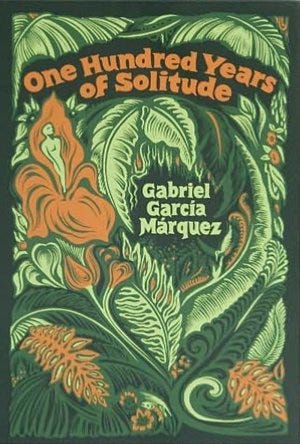
It’s likely I’ll plug this book every year until I’m done making Substack posts, but if you want something to do during this holiday, whether you’re a reader or not, I highly recommend picking this book up. One Hundred Years of Solitude is a masterpiece like no other masterpiece, the winner of the Nobel Prize (which doesn’t mean shit) and one person called it “the most important book since Genesis.” What is it about? It’s about a town called Macondo, from its founding to its destruction. It takes course over one hundred years, and tells the family lineage of one of the founding families. The book is endlessly funny, but what it does is retell the story of Colombia and how it was colonized by the Spanish. This book changed my life. I wrote one way before reading it, and read a different way now. Its original language is Spanish, but the translations are perfect, seeing as this is one of the most well regarded, translated books in the world.
Notes on reading it: There’s a lot of fucked up stuff in this book. Don’t read it and think that the author is approving of what occurs, the author is a deity-like voice that doesn’t seem to give judgements. It was also written in 1967, and certainly some language in it isn’t ideal. Welcome to reading books! Contextual reading, folks, contextual reading.
If you want to read this amazing masterpiece, which I recommend you do, I also recommend watching the Crash Course video on it first, which will help you get your sea legs on this dense, challenging literature. I read this book once a year because it means so much to me. Now, on to my entirely subjective favourite books of the year. I have given links to Indigo, because it’s a big book store- but if you can find it in a local book store, I encourage you to do so.
My Favourites of the year
Moderato Cantabile, Marguerite Duras (French, Nouveau Roman)
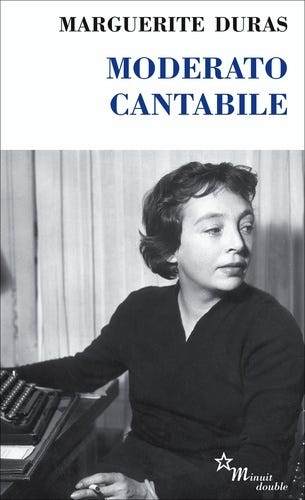
This book melted my little brain. This mid 20th century nouveau roman gripped me. It’s about sex. Or maybe it’s about murder? It’s possibly feminist. It’s definitely feminist, it’s Duras.
The problem describing this book and recommending it to you is that nothing of interest or importance explicitly happens in this book. The story, in its eight chapters, tells the same story six times in a row without ever saying what’s happening. The narrator doesn’t even seem to know what’s going on. Sometimes, instead of telling you what happened, the narrator asks what happened. In fact, the language is so vague and distant, that the whole story is told in between the lines.
The story revolves around a bourgeois French woman who starts drinking wine and meeting up weekly with a working class man in a cafe. The two of them have conversation. Eventually there’s a party, where the woman gets drunk. Then the book ends. In between the lines much is implied, and the book needs to be experienced first hand to understand the brilliant effect that Duras creates in writing this book. It’s short, less than 150 pages, so even if it’s not your favourite book, I think its worth reading. It helped usher in new waves of feminism in France that worked to change our society today, and helped Canada begin its own feminist revolution after the sixties.
I read it in French, and I would recommend sticking to French if you’re fluent, but if you’re a casual French speaker I’d read the translations! The language is complex and structured in a challenging way, and because it’s written in a distant, cold, esoteric manner the book can be hard to follow. I do recommend it though, it’s an old classic, and can be picked up at a library or book store near you, doubtless.
The Social Safety Net / Corporate Control, Nora Loreto (English, non-fiction, politics)
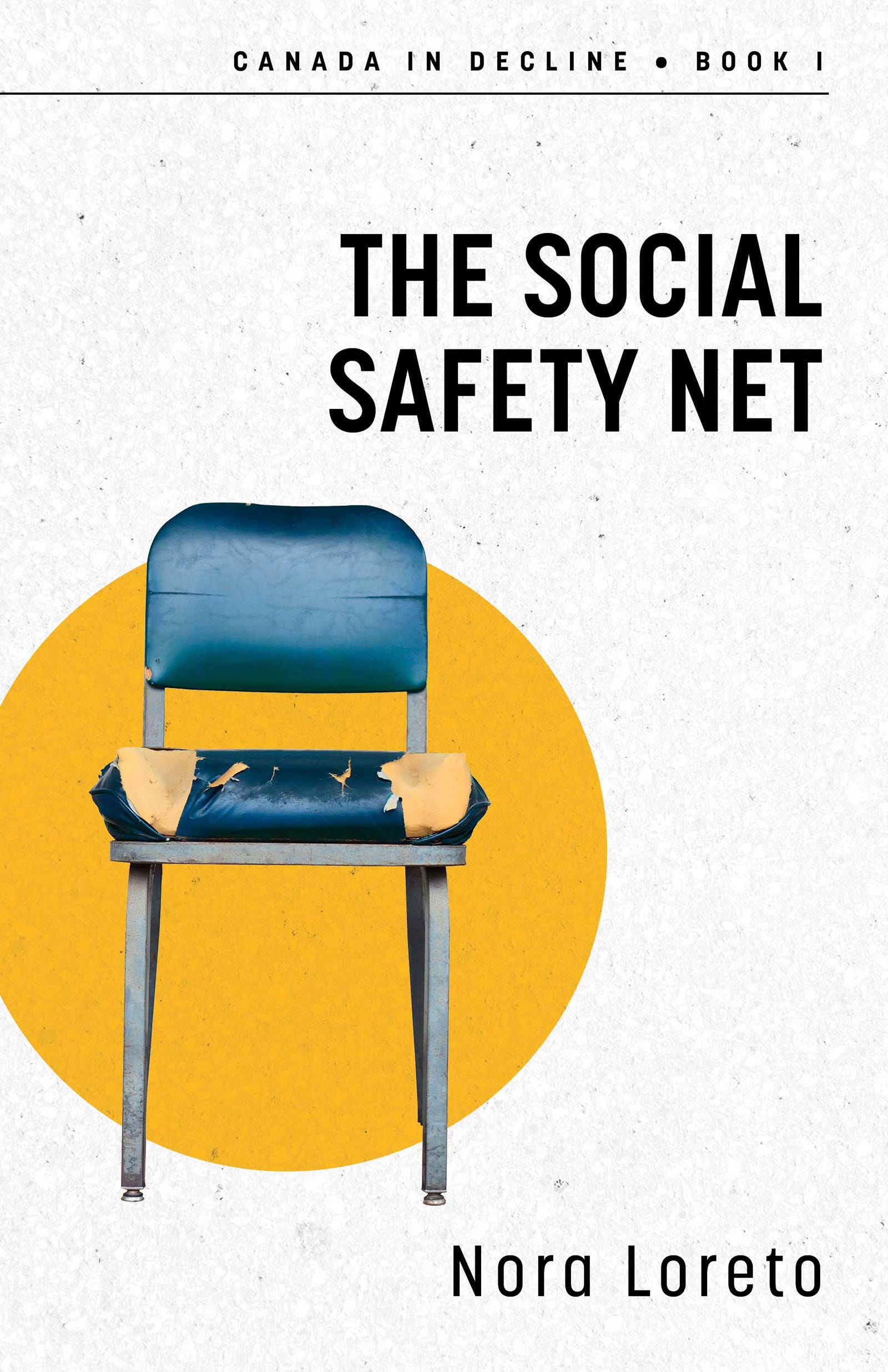
If you don’t know Nora, I’m a bit surprised you follow me. Far more radical than I am, and far smarter as well, Nora is an author, a journalist and an activist with a fiery personality, who has sacrificed a lot of her career in order to stand up for her beliefs. These two books are small but mighty, and are in many libraries across the country. It will educate you on much of what you suspected- Canada is in decline, and although it started in the eighties, we’re feeling these effects today. What’s fantastic about this book, is it will allow you to properly assess the things you’re suffering in this life, and why Canada feels like it’s doing so poorly.
It’s because it is!
I finished both of these books in about a day each, so if you want to just have a ton of knowledge, and Loreto has a full bibliography of research backing up her stats, these are the books. Although she’s a socialist, anyone could read these books and understand what’s happened, regardless of politics. Our country has been bought and sold to corporations. Enough said. Go read these. I got them at the library, because they’re so readily available. You probably can too. Also, go subscribe to Loreto’s substack.
The Wars, Timothy Findlay (English, Fiction)
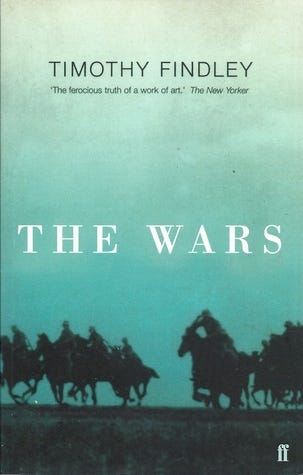
This was a game changing book for the Canadian literature scene when it was published. It’s a story about World War I, and was the first widely published and accepted English-Canadian literature to have a gay/bisexual main character (the main character is probably gay, but it can be argued he is bisexual).
It retells the story of World War I by “finding documents” and retelling the story “as a journalist.” It is entirely fiction, but it tells an amazing, and harrowing story, of the life of a soldier and his slow descent into madness after suffering horribly during the first world war. It was considered one of the first “postmodern” books in Canada, or at least it’s one of the biggest influences on the genre in Canadian fiction.
Be warned, you will be absolutely destroyed by the pain in this book. It feels real because it is real. At first, it’s a war story. By the end, it’s a horror story that will make you feel the pain and the despair of the people on the western front.
The French translation is exquisite, by the way.
The Lifted Veil, George Eliot (English, Fiction)
You could literally read this in one hour. The main character is cursed with the ability to read other people’s minds, which eventually drives him into a spiral of depression and isolation.
But at the heart of this superb little novella is a haunting and, in my opinion, pertinent question. Can the main character actually read minds, or is he just driving himself into isolation because he’s assuming things about other people? Read the book. I read it in about 75 minutes. You can find PDFs of it online, or Epubs on Gutenberg for free. It’s in the public domain. Such a good read. Really stuck with me. Fun, well written, and it makes you feel good to finish a book in an hour.
Les Chambres de bois (French, Fiction)
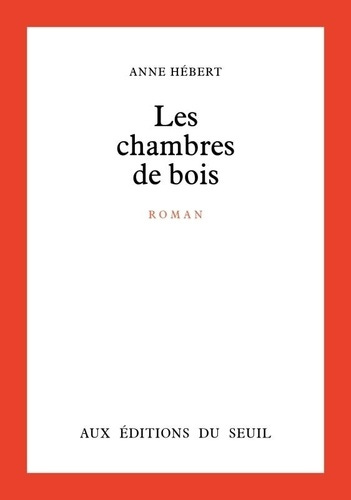
The first feminist book published in Canada. This book is exceptionally hard to read, admittedly. Just like Moderato Cantabile, nothing really happens in this book. It tells a story about a young woman who grows up in the cold, frigid rural area of Quebec, or maybe France. Definitely Paris.
Anne, a working class girl who’s mother dies in the first chapter, helps raise her family and then marries a bourgeois man who also happens to work as a musician. Then they live in a house, and eventually the book ends.
This superb book is written like an impressionist painting. It paints vague, obscure pictures that are never fully clear. Nothing is ever spelt out. Time jumps happen, but it’s unclear how long its been. Relationships are implied, but never spelt out. I’ve never read anything like it.
It also happens to have been so controversial and radical in its ideas that it was banned from Quebec and Canada, and Anne Hébert was only able to get it published in Paris, where the feminist movement was already in full force. Obscure little title only known to Quebecers. I read it in French, but I’m sure there’s good English versions.
The Worst Book I’ve Read This Year
Flesh, David Szalay (English, Fiction)
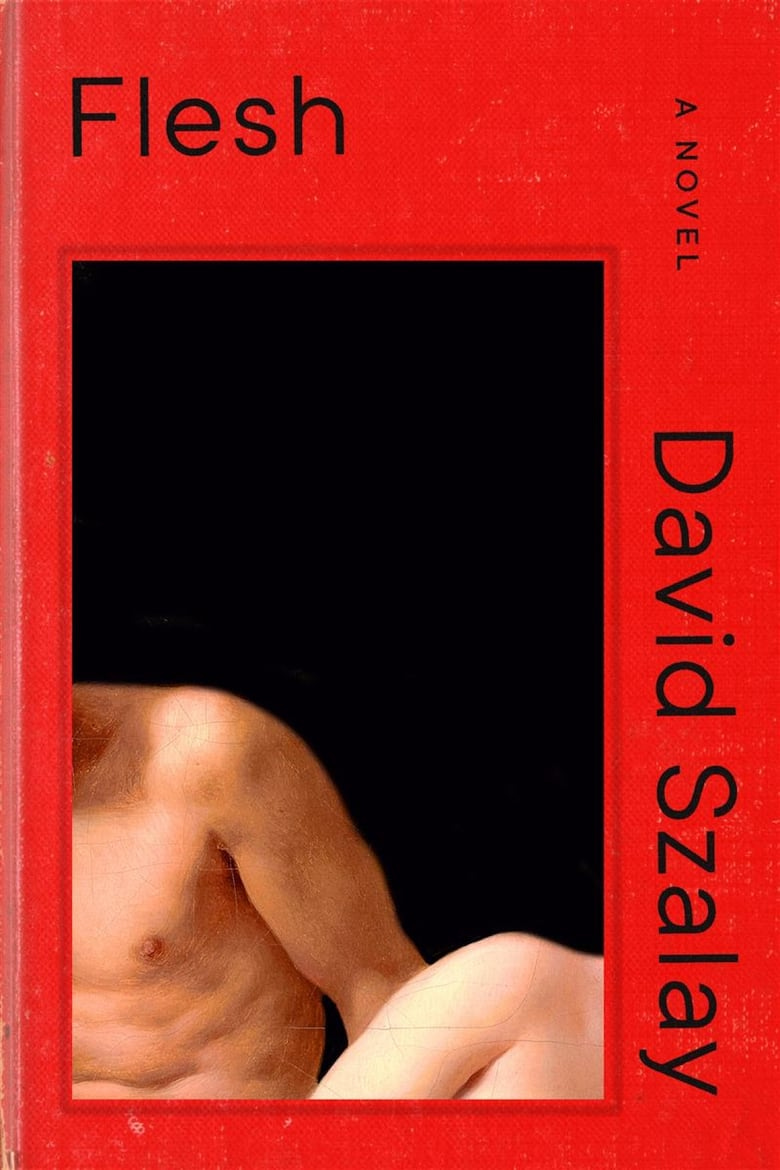
I cannot remember the last time I read a book as bad as this one.
I feel bad, because David Szalay is a Montreal-Born author, and I love Canadian books. Hell, there’s a chance that he sees this. I apologize David, I mean no offense. But also, this book was bad. It won the booker prize. I will never be reading another book that wins the booker.
This book is about what it feels like to be an incel, or at the very least a toxic, lonely male. The type of man who often turns into a school shooter. I have empathy for the main character, but if the male experience is this, then it’s no wonder I don’t identify as he/him.
The main character, Istavan, is groomed and raped by a pedophile, and then spends the rest of his life masturbating while life happens around him. He becomes rich at one point, because of circumstances, and then immediately loses his entire fortune, once again because of circumstances. The character has the emotional range of a frozen fish stick, and most of his dialogue is “okay.” If you want a good laugh, go read the fable reviews for this devastatingly bad book. The top review on the app says “this book is like trying to talk to your friend’s dud boyfriend who you’re meeting at the bar for the first time. It’s a lot of you asking questions that he then repeats because he can’t hear you, and then he answers monosyllabically... flesh may be important to the booker prize judges, but it is not important to me. They may like this book, but I sure don’t. I can understand the point it’s trying to make about trauma and male loneliness or how hard it is to be a man or whatever tf else it is trying to sell to me but it doesn’t mean I have to like it. I don’t hate your boyfriend, but I do think he’s incredibly boring.”
Every step of the way, the main character gets sad that a woman doesn’t reciprocate his feelings, so he masturbates. Oh, but wait, now that woman who rejected him changes her mind and has sex with him. Rinse, repeat.
This book quite literally does the trope of “her boobs sagged boobily,” when it describes a woman’s body through the years accrued on the saginess of her breasts. It is every single negative stereotype you can think of about men, and male authors all piled into one book. If you want to laugh, and feel like standing in solidarity with my suffering for having read this book, I recommend stealing this dreadful work of fiction and then emailing me about how bad it was. If you’re a booker prize judge, I’m worried about you. If you’re Mr. Szalay, I’m sorry for trashing your book. It’s not good, but you’re a published novelist and I’m not (yet). I would give this book minus one star for hurting me physically and making me actually angry.
But also I laughed a lot because I got to read all the terrible reviews of it. There’s silver linings everywhere.
Great list! I love mid-century woman's fiction so I'm excited to add the two to my list. For a similarly vibes/vignette based story where you never really learn what happens, Passing Ceremony by Helen Weinzweig is excellent.
Bonne Année !
I was checking this space
Thank you for this post
100 ans de solitude was one of my mom's favourite books that she never offered me ^^ it makes it taboo-like. I may read it before I die hehe.
I read very few books this year.
My favourites (the only ones?) are "Parents have feelings too!" by Hilary Jacobs Hendel et Juli Fraga + Rachel Kaplan's "Heal, feel and let that shit go". For people who need to make friends with their feelings ^^