

The "French" NDP debate did not live up to its namesake
A mere 19 per cent of the debate was in French.

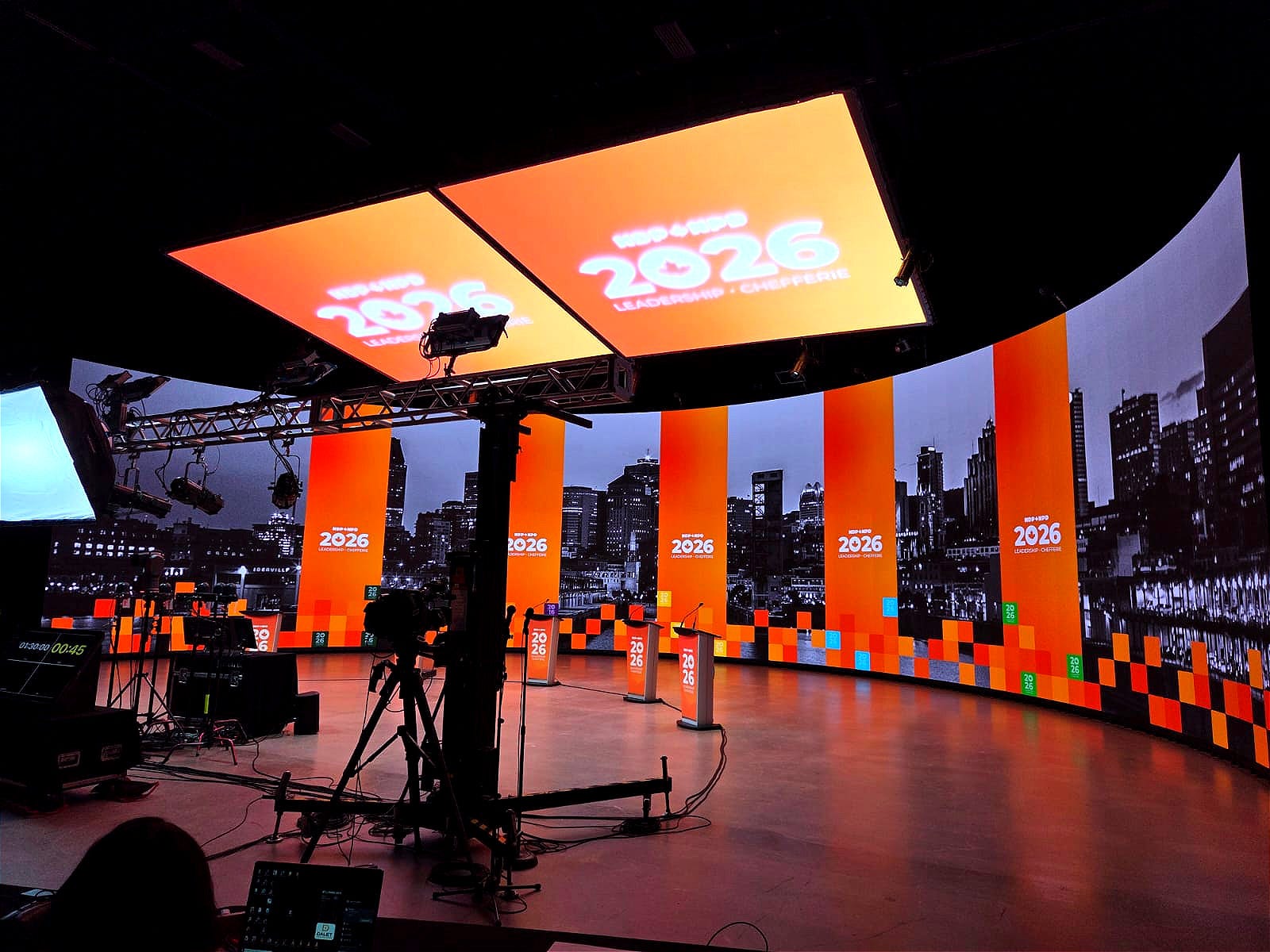
The “French” NDP debate was a disappointment.
The purpose of Thursday’s debate is unclear. The NDP was under no pressure to hold a French language debate in 2025, and stipulated in their ruleset that they would either have 1 French Debate and 1 English debate, or, one debate with both languages. Based on Thursday night’s performances, it would have probably been wiser having a single debate closer to the leadership election, if only to give more time for the candidates to practice.
Although there is a lot to criticize about the debate, I will refrain from doing so until the “English” debate, simply because the failure to engage with French was the highlight of the evening.
“The debates will occur in each official language, or if there is only one debate, in French and English in equal parts,” say the rules for the leadership race outlined on the official NDP website.
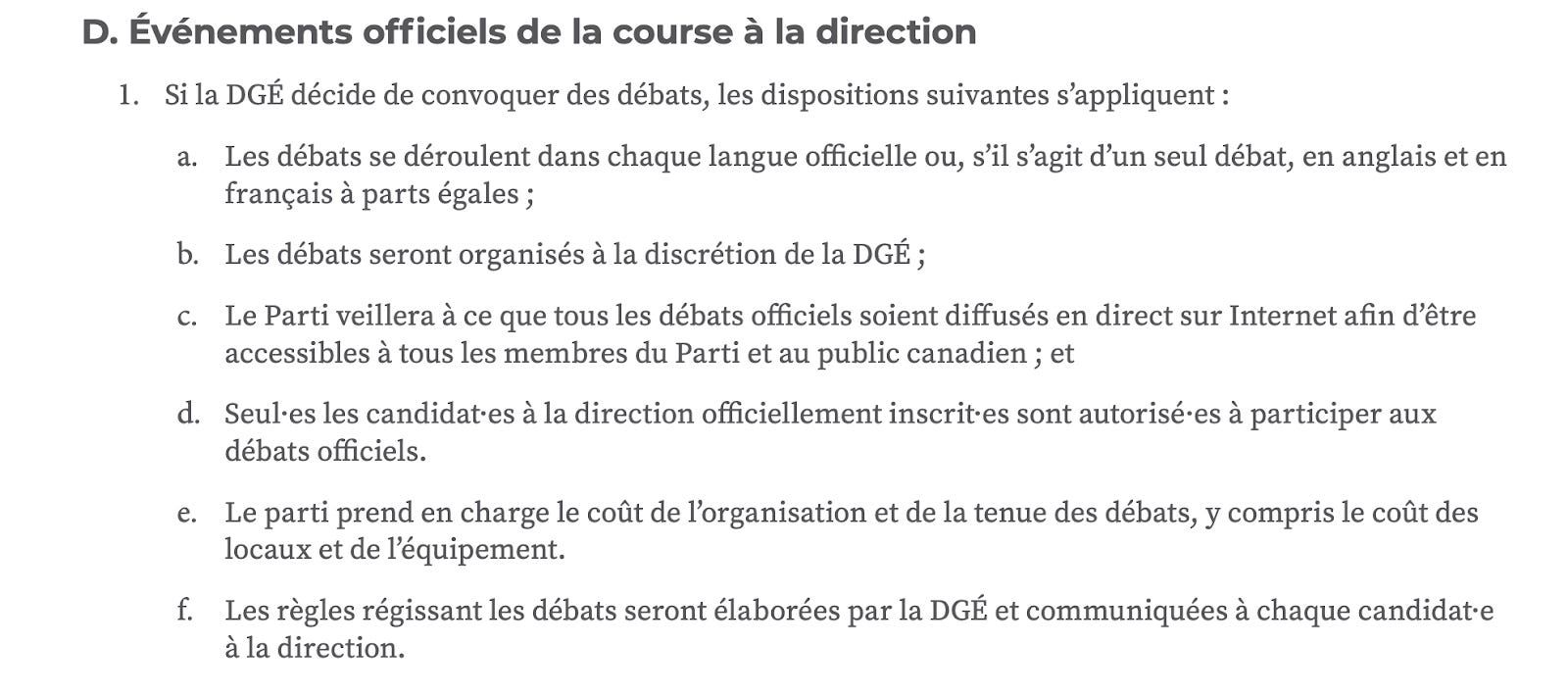
The NDP’s directors decided not to follow their own rules that they outlined. In the end, they said the debate would be 60% French, and 40 per cent English.
The debate fell wildly short of even that significantly lower effort.
If there were francophones interested in the party and had tuned in to learn about the leaders and whether they would appeal to Quebec, they were likely highly disappointed. Overall, the decision to call this a “French” debate may have done more to hurt these candidates in Quebec than help them.
We will not spend much time on the pronunciation or accent, seeing as several of the candidates have been attempting to speak French for approximately two months. Suffice to say that much of the French spoken on stage was hard to understand. The candidates would need to improve their pronunciation if they expect to be on a national stage.
If the moderator asked a question in French, the candidate was supposed to respond in French. The only candidate who did so was Heather McPherson. Avi Lewis spoke French the second most, although was still outmatched by McPherson.
We at On the Trail have taken the transcript and given an approximate analysis of the percentage of French spoken by each candidate.
Use the page buttons to see everyone
Heather McPherson put a massive effort into working on her French, and it showed. She also has the most advantages in learning the language, seeing as she works in the Parliament, and all MPs have access to language lessons. Lewis came second, but still spoke nearly two minutes fewer than McPherson, sometimes defaulting to English so he could better express himself.
Not including the moderator
If the moderator’s time is included in the total, the candidates only spoke French for 19.13 per cent of the debate. If we remove the moderator from the total debate time, which this chart does, the candidates spoke for around 25 per cent of the debate in French.
Of course, most of, if not all of, these candidates only recently started learning the language, and can’t be expected to respond in a rapid-fire debate. The blame does not truly lie with the candidates, but with the organizational structure of the NDP.
Many sources have talked to us about the disorganization of the NDP, which goes far beyond what has been reported on. People within the party have spoken to us about their frustrations with the party brass, and there is a continued frustration between the members and the party establishment, who may have been well advised to hold off on a French language debate which didn’t meet even the most basic rules that they set for themselves– or the diminished rules that they tried to put in place.
A potentially more effective way to do this debate could have been to provide the candidates with all the questions in advance and allow them to write out everything beforehand. A loss of dynamism would have been acceptable, considering that this debate was supposed to be 100 per cent in French, based on the NDP’s rules.
Considering that there were no challenging questions thrown at them by the moderator, Karl Bélanger, this approach would have allowed them to speak to the Quebecois audience whom they are trying to reach, as well as better highlight the differences in their platforms. However, there may be other approaches that could have worked as well.
It might be a blessing then that few people outside of the most hardcore NDP are going to watch this debate. However, what may have been more effective is prioritizing a format that could be clipped and used on social media, seeing as many people do not have the time to sit through 90 minutes of people agreeing with each other.
Something that might be good to ask is whether or not debates in this format have significant relevance in 2025, or if even having a French debate which might hurt the candidates was the right decision. Most people are not paying attention to a leadership election (the Liberal leadership election in 2025 was an exception, because whoever was elected in that would become Prime Minister.) and alternative approaches could have been acceptable.
Every candidate acknowledged that the only way to win an election as the NDP would be to win Quebec.
Both McPherson and Lewis maintained the French language during the entire debate around appealing to Quebec. The other three candidates all apologized for their lack of French, and promised to do better in the future. Nonetheless, considering how necessary it is for the NDP to win Quebec, whoever wins needs to devote an extreme amount of time to learning the language. It is nearly certain that there will be an election in 2026, or early 2027.
Only Lewis and McPherson were able to respond to reporters asking questions in French during the scrum after the debate.
Still, Quebecois are used to politicians only learning the language as a tool to win. In the debate, there may have only been one person who might have truly made Quebecois people feel understood. Tanille Johnstone spoke about her own language, and in what seemed like a successful bid to empathise with francophones, vowed to learn and grow.
“My adult life has been spent trying to hone my native language of Liq’wala (Liǧʷiłdax̌ʷ). We only have maybe 6 to 10 fluent language speakers that speak Liq’wala (Liǧʷiłdax̌ʷ) in my community. I feel the commitment to language as francophone folks do. I am truly committed to French across our country in an equitable way because I know what it feels like to have your language threatened,” she said.
Every person was asked if they were satisfied with their performance in French. Lewis and McPherson seemed fairly confident, and both of them promised to continue growing and learning. McQuail, Ashton and Johnstone all seemed ready to learn, grow, and if they win the leadership, become French speakers.
However, hope is not lost. If these candidates redouble their efforts and work to truly master the language, they could still appeal to Quebec.
As of Thursday, none of the five candidates could call themselves as proficient as either Mark Carney (who is not good at French, but can still perform) or Pierre Poilievre, and would struggle to keep up in a dynamic debate on stage that is less friendly, and much more confrontational. All five will need to learn at an incredible pace if they expect to become the leader of Canada.